Introduction
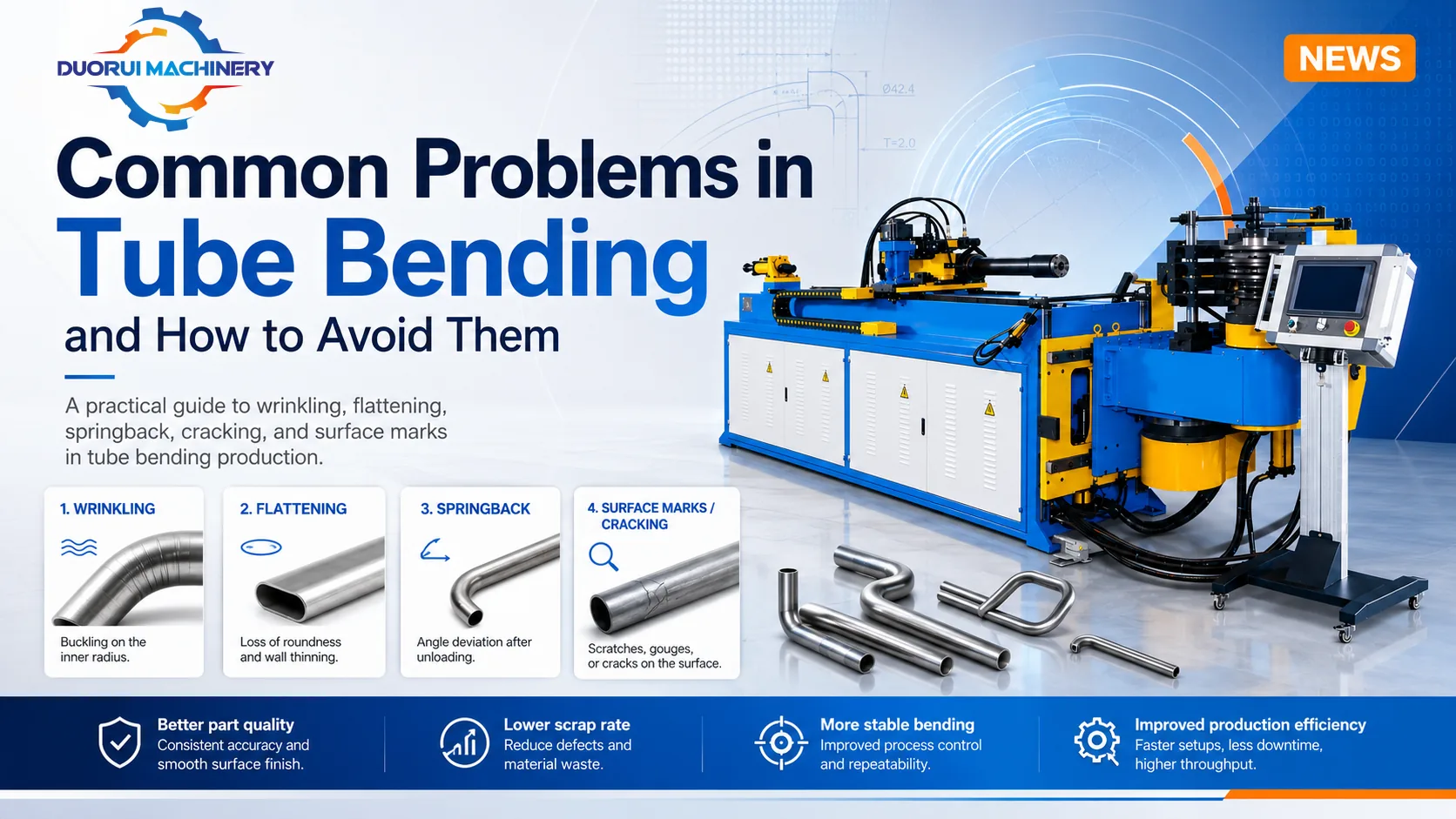
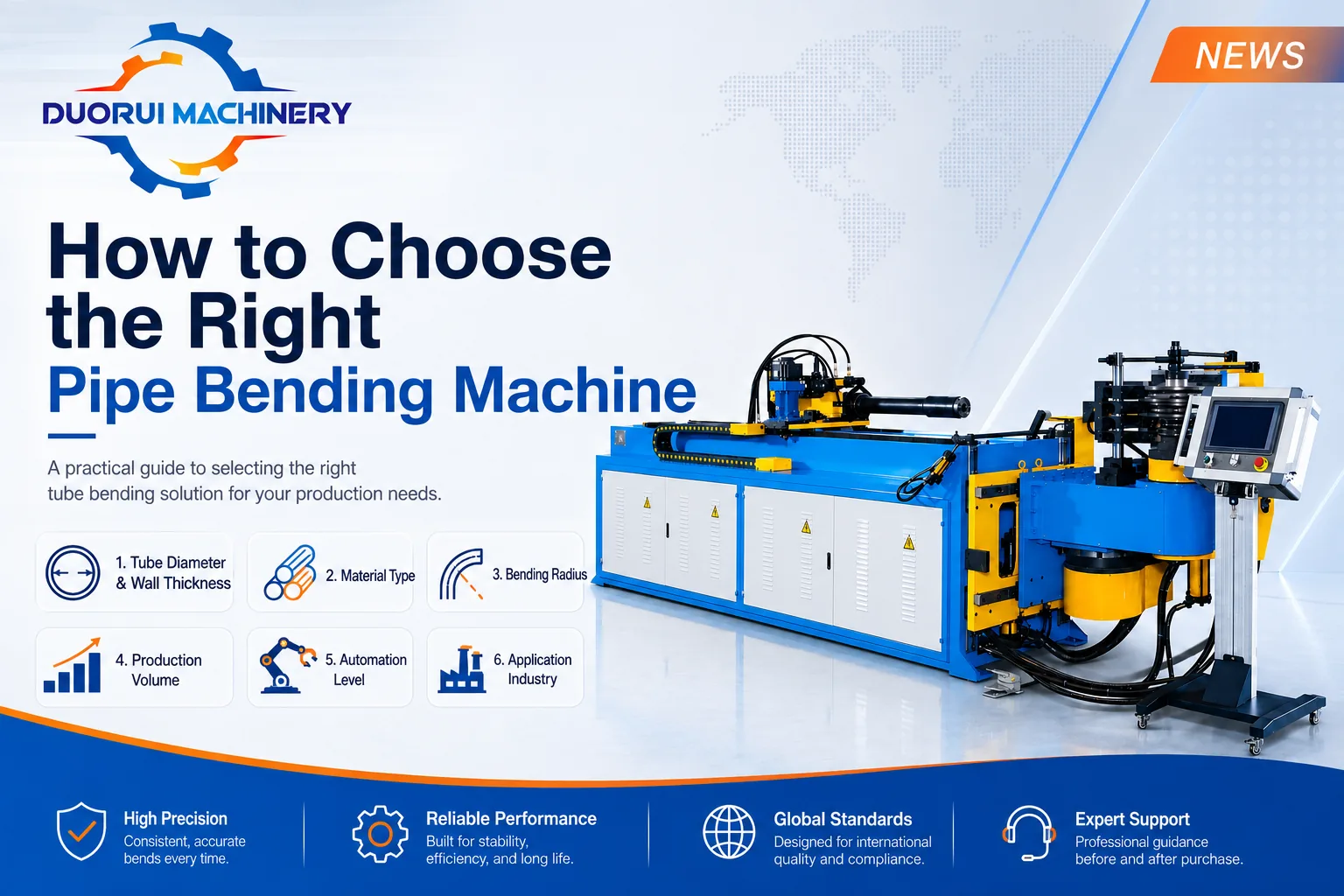
Pipe bending machines are widely used in metal tube processing industries such as furniture manufacturing, automotive parts, fitness equipment, motorcycle and bicycle parts, handrails, shelving, construction hardware and customized metal tube products.
For many manufacturers, choosing the right pipe bending machine is not only about machine price. A suitable machine should match the customer's tube size, wall thickness, material, bending radius, production volume and finished product requirements. Selecting the wrong machine may lead to unstable bending results, low efficiency, high tooling cost or limited production capability.
1. Confirm the Tube Diameter and Wall Thickness
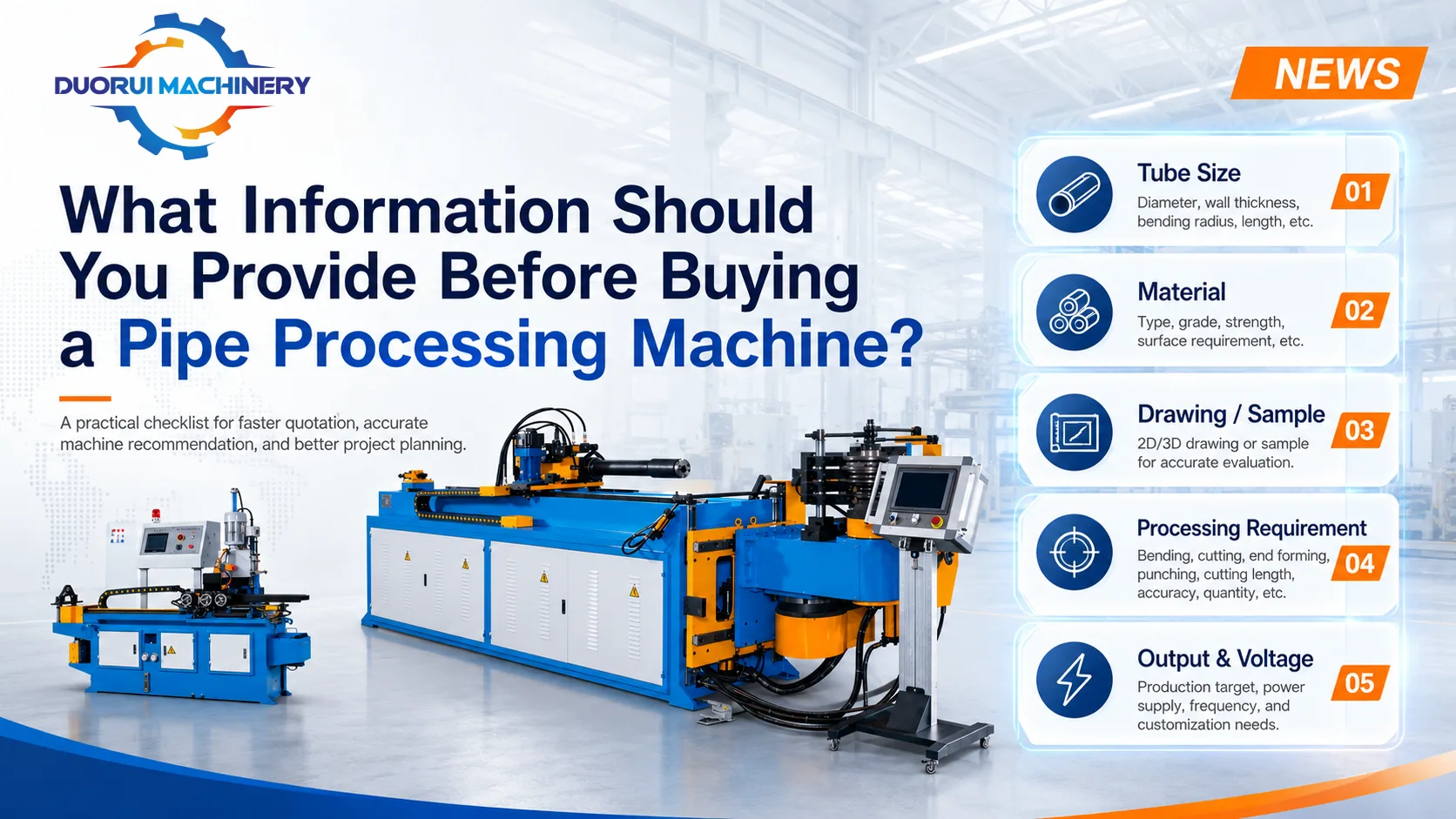
The first step is to confirm the basic tube specifications: tube outer diameter, tube wall thickness, tube shape, tube material and finished product drawing or sample photo. Different machine models are designed for different tube sizes. Small-diameter tubes may require compact machines, while large-diameter or thick-wall tubes usually require stronger bending capacity, higher hydraulic power and heavier machine structure.
2. Check the Tube Material
Tube material directly affects bending performance. Common materials include carbon steel, stainless steel, aluminum, copper, galvanized tube and other metal profiles. Different materials have different hardness, ductility and springback behavior. Stainless steel and thick-wall carbon steel usually require stronger machine power and more stable tooling support.
3. Confirm the Bending Radius and Bending Angle
Many buyers only provide the bending angle, but the bending radius is equally important. A smaller bending radius usually requires higher machine performance, suitable tooling and sometimes mandrel support. Buyers should provide bending angle, bending radius, number of bends, distance between bends and finished product drawing.
4. Decide the Required Automation Level
Pipe bending machines can be manual, semi-automatic, NC or CNC controlled. For simple bending jobs or small-batch production, a semi-automatic or NC machine may be enough. For complex parts, repeated production, multi-angle bending and higher accuracy requirements, CNC pipe bending machines are usually more suitable.
5. Consider Production Volume
Production volume determines whether the buyer needs a standard machine, CNC machine, automatic feeding system or customized production solution. Buyers should estimate daily production quantity, monthly production target, working hours per day, product variety and batch size.
6. Evaluate Machine Structure and Stability
A good pipe bending machine should have a strong machine body, stable clamping structure, reliable bending head and durable hydraulic or servo system. Machine frame strength, feeding system, control system, hydraulic system and mold quality all influence long-term stability.
7. Check Tooling and Customization Support
Pipe bending quality depends heavily on tooling. Different tube sizes and bending requirements usually require different bending dies, clamping dies, pressure dies and mandrel configurations. A professional supplier should be able to recommend tooling based on tube diameter, wall thickness, bending radius and finished product design.
8. Consider Application Industry Requirements
Furniture manufacturing, automotive parts, fitness equipment, motorcycle and bicycle parts, handrails, shelving and construction hardware all have different bending requirements. Understanding the final application helps the supplier recommend the right machine configuration and tooling solution.
9. Ask About Testing Before Shipment
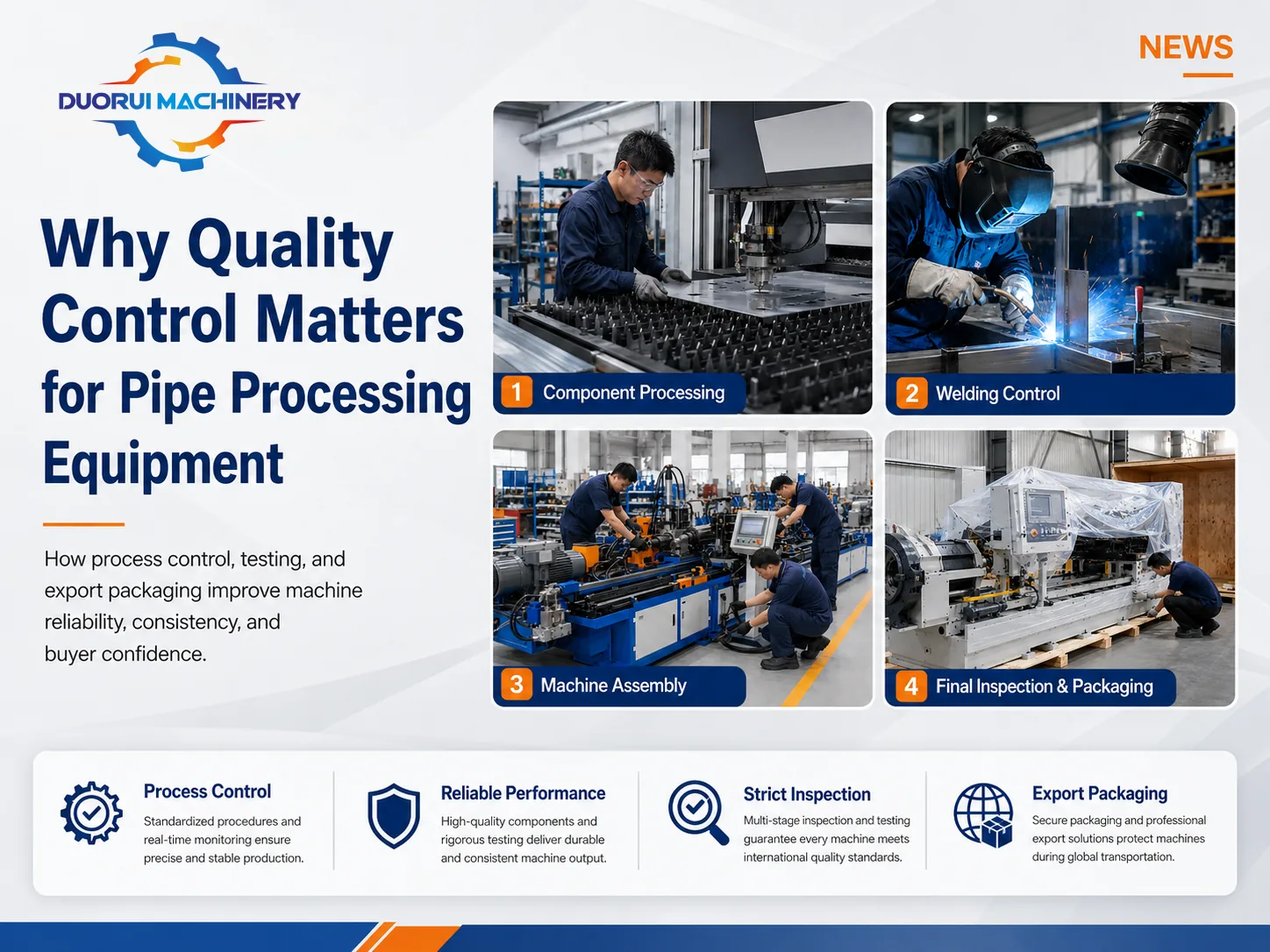
A professional testing process may include machine operation test, bending sample test, control system test, hydraulic system test, tooling check and final inspection before packaging. Sending drawings or samples before production helps reduce shipment risk.
10. Choose a Reliable Supplier
A reliable supplier should provide manufacturing experience, technical communication, machine customization capability, export packaging, spare parts support, installation guidance and after-sales service.
Conclusion
Choosing the right pipe bending machine requires more than comparing prices. Buyers should evaluate tube size, material, wall thickness, bending radius, bending angle, production volume, automation level, tooling support and application requirements. With complete information, DUORUI MACHINERY can recommend a more suitable pipe bending machine solution for production needs.