Introduction
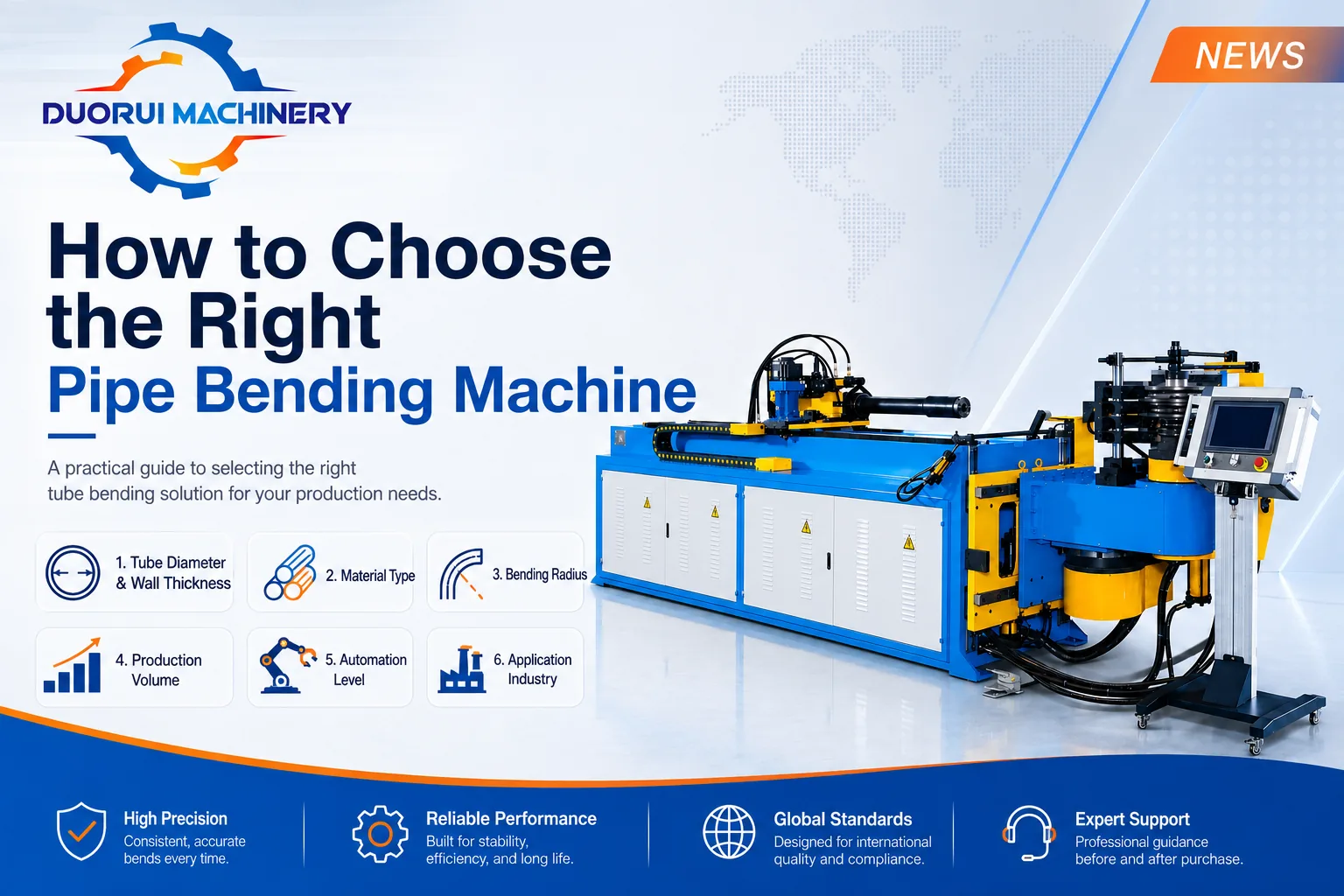
Choosing the right pipe processing machine is not only about selecting a machine model or comparing prices. For metal tube processing, the correct machine solution depends on tube size, wall thickness, material, finished product design, processing method, production volume and automation requirements.
When buyers provide complete information before quotation, the manufacturer can evaluate the project more accurately and recommend the right machine configuration, tooling, control system and optional customization. This helps reduce communication time, avoid incorrect machine selection and improve purchasing efficiency.
Buyer Information Checklist
Before inquiry, prepare product drawing or sample, tube size and shape, tube material, processing requirement, accuracy and surface requirement, production target, voltage and factory conditions, and customization needs.
1. Product Drawing, Sample Photo or Finished Part Design
A product drawing or clear sample photo helps the manufacturer understand final tube shape, dimensions, bending angles, hole positions, end forming details and assembly requirements. If a formal drawing is not available, buyers can provide sample photos, sketches or videos.
2. Tube Size and Tube Shape
Tube size directly affects machine selection. Buyers should provide tube outer diameter, wall thickness, tube length, tube shape and profile type. Common tube shapes include round, square, rectangular, oval and special profile tube.
3. Tube Material and Material Grade
Material influences machine power, tooling design, cutting method, bending performance and forming result. Common materials include carbon steel, stainless steel, aluminum, copper, galvanized tube and other metal profiles. Material grade and surface finish requirements are useful for evaluation.
4. Required Processing Method
Buyers should explain whether they need pipe bending, pipe cutting, pipe punching, pipe end forming, pipe chamfering, threading, polishing or customized tube processing. For bending, provide radius, angle, number of bends and mandrel requirement. For cutting, provide length, angle, accuracy and surface quality. For punching, provide hole shape, diameter, distance, direction and quantity. For end forming, provide expanding, shrinking, flaring, reducing, sealing or other requirements.
5. Production Capacity and Automation Level
Daily output, monthly quantity, working hours, batch size and operator arrangement help determine whether a manual, semi-automatic, automatic or CNC solution is suitable.
6. Accuracy and Quality Requirements
Buyers should explain bending accuracy, cutting accuracy, hole distance accuracy, forming tolerance, surface quality, burr requirement and final assembly requirements. This helps the supplier choose the correct control system, feeding method, clamping method and tooling design.
7. Voltage, Air Supply and Factory Conditions
Common voltage standards include 220V, 380V, 415V, 50Hz and 60Hz. Buyers should also provide phase, available air pressure, workshop space, installation layout and any safety standard requirements.
8. Customization Requirements
Common customization includes tooling, mold design, mandrel configuration, automatic feeding, unloading system, control language, voltage, machine color, safety cover and special fixtures.
9. Packaging, Delivery and After-Sales Requirements
International buyers should confirm packaging method, wooden case protection, delivery time, spare parts, installation guidance, online support, training video and warranty policy.
Conclusion
Providing complete information before buying a pipe processing machine helps both buyer and manufacturer work more efficiently. With clear project information, DUORUI MACHINERY can recommend a more suitable solution, provide a more accurate quotation and support customers from machine selection to production and after-sales service.